Does Changing Your YouTube Title Hurt Your Views? (2026 Answer)
September 6, 2026 · 4 min read · The TubePush Team
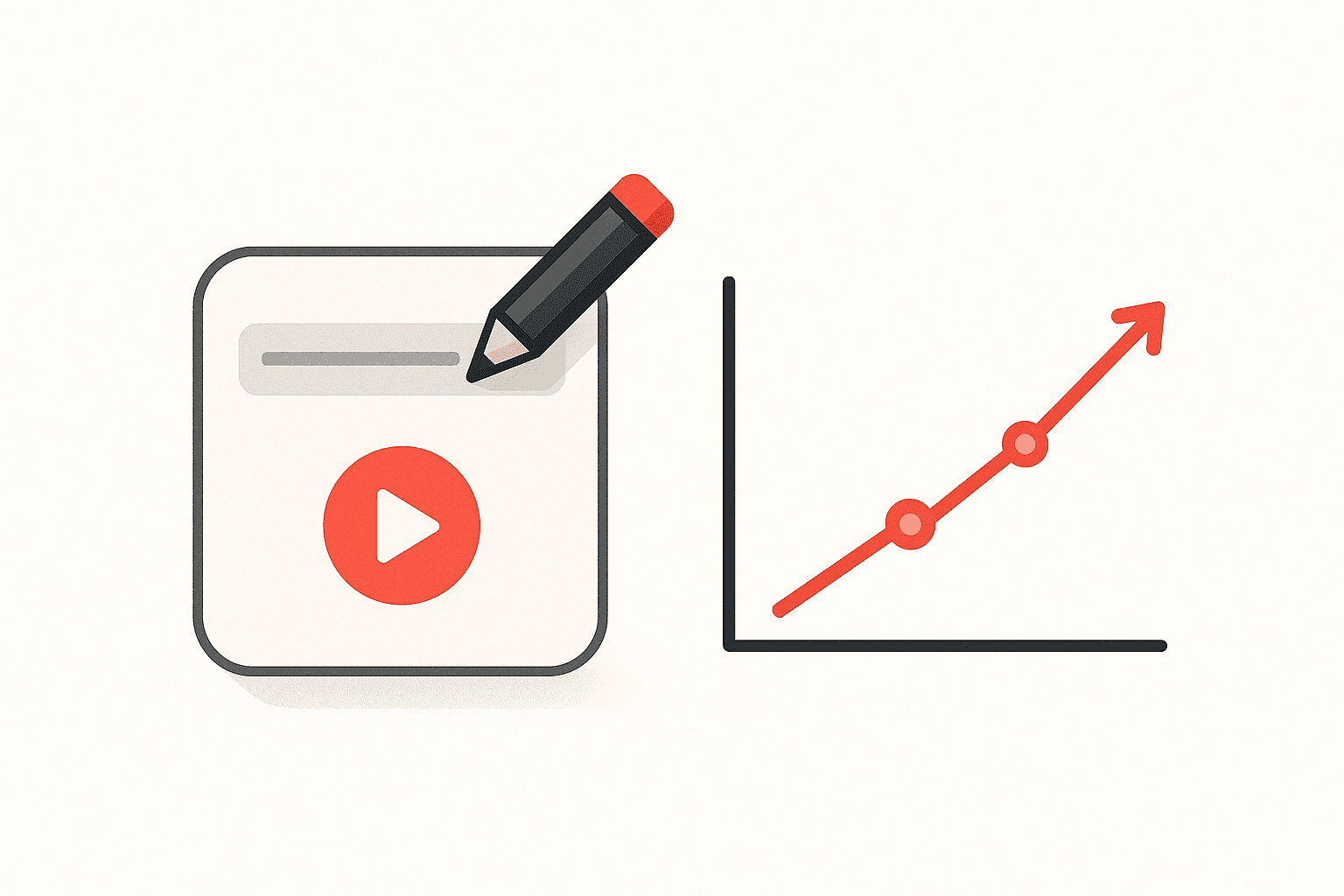
Short answer: no, editing your title, description, or tags does not reset your views, and it does not hurt an already-ranking video. What actually puts a video at risk is a different, much rarer mistake — and it's easy to avoid once you know what it is.
Where the fear comes from
The worry is understandable. Views, watch time, and search ranking took months to build, and touching the metadata feels like tempting fate. Some creators have watched a video's traffic dip right after an edit and assumed cause and effect — but that's almost always coincidence (algorithm noise, seasonality, a competing video published that week) rather than the edit itself.
YouTube's own systems separate performance data (views, watch time, likes, comments, subscribers gained) from metadata (title, description, tags, thumbnail). Editing the second does not touch the first. Your view count, your watch-time history, your position in someone's "up next" queue — none of it resets.
What editing metadata actually does
Changing your title or description re-indexes the video for search and suggested — usually within hours, sometimes up to a day or two. YouTube re-reads the new text to understand what the video is about, and search ranking adjusts based on the new keyword relevance, same as it would for a brand-new upload. If your new title targets a better keyword, ranking can improve. If it's vaguer or off-topic, it can drop. The mechanism is relevance, not punishment.
This is exactly why it's worth revisiting metadata on older videos: a title that undersold the content, or missed the keyword people actually search, is fixable without any downside risk.
The one thing that actually resets a video
There is a real trap, and it's the thing people confuse with "editing metadata": re-uploading the video file itself, or drastically changing the video content behind an existing URL. That creates what's effectively treated as a new piece of content, and it can lose accumulated watch history and ranking. Editing the text fields — title, description, tags, even the thumbnail — never touches the video file and carries none of that risk.
To be explicit about what's safe to change any time:
- Title — safe. Re-indexes, doesn't reset stats.
- Description — safe. Same as above.
- Tags — safe, and lowest-impact either way (see our tag guide).
- Thumbnail — safe. No ranking penalty; a better thumbnail can only help click-through.
- The video file — this is the one to leave alone once it's live and has traction.
When it's worth editing an old video
- The title undersells it or misses the real search term. If your video ranks for "youtube tags" but the actual query volume is on "how many tags on youtube," rewriting the title to match is free upside.
- Search intent has shifted. Trends and terminology change year to year — a title dated to an old year or an outdated framing quietly loses relevance.
- The description doesn't front-load the keyword. See our tags & descriptions guide for the above-the-fold rule.
- Performance data tells you something. A video with high impressions but low click-through has a targeting or curiosity problem in the title — exactly the kind of thing worth fixing.
How to do it without second-guessing yourself
- Check the traffic source data in YouTube Studio first — know what's actually driving views before you change anything.
- Keep the new title relevant to the actual content — relevance is what protects ranking, not caution.
- Change one thing at a time on your highest-traffic videos if you want a clean before/after read; batch-edit lower-traffic ones freely.
- Give it a few days to re-index before judging the result — search ranking doesn't update instantly.
For the full framework on what makes a title or description rank in the first place, see our complete YouTube SEO guide and title formulas that convert search into clicks.
Re-optimize without the manual work
Going back through old videos one by one to rewrite titles and descriptions is tedious, which is why most creators never do it — even though it's free ranking upside sitting untouched. TubePush reads a video's transcript, generates an SEO-optimized title, description, and tag set, and pushes the update straight to YouTube. No re-upload, no risk to your view count — just better metadata on videos you already have.
Stop hand-writing YouTube SEO
TubePush generates optimized titles, descriptions, and tags from your transcript — then pushes them straight to YouTube in one click.
Try TubePushKeep reading
How to Get More Views on YouTube: 12 SEO Tactics That Actually Work
A practical, no-fluff checklist to get more views on YouTube — from keyword research and titles to retention, thumbnails, and the metadata most creators get wrong.
YouTube SEO: The Complete 2026 Guide to Ranking Your Videos
Everything you need to rank on YouTube in 2026 — how the algorithm actually works, keyword research, titles, descriptions, tags, thumbnails, and a repeatable optimization workflow.