YouTube Tags & Descriptions: How to Optimize Both for Search
July 15, 2026 · 4 min read · The TubePush Team
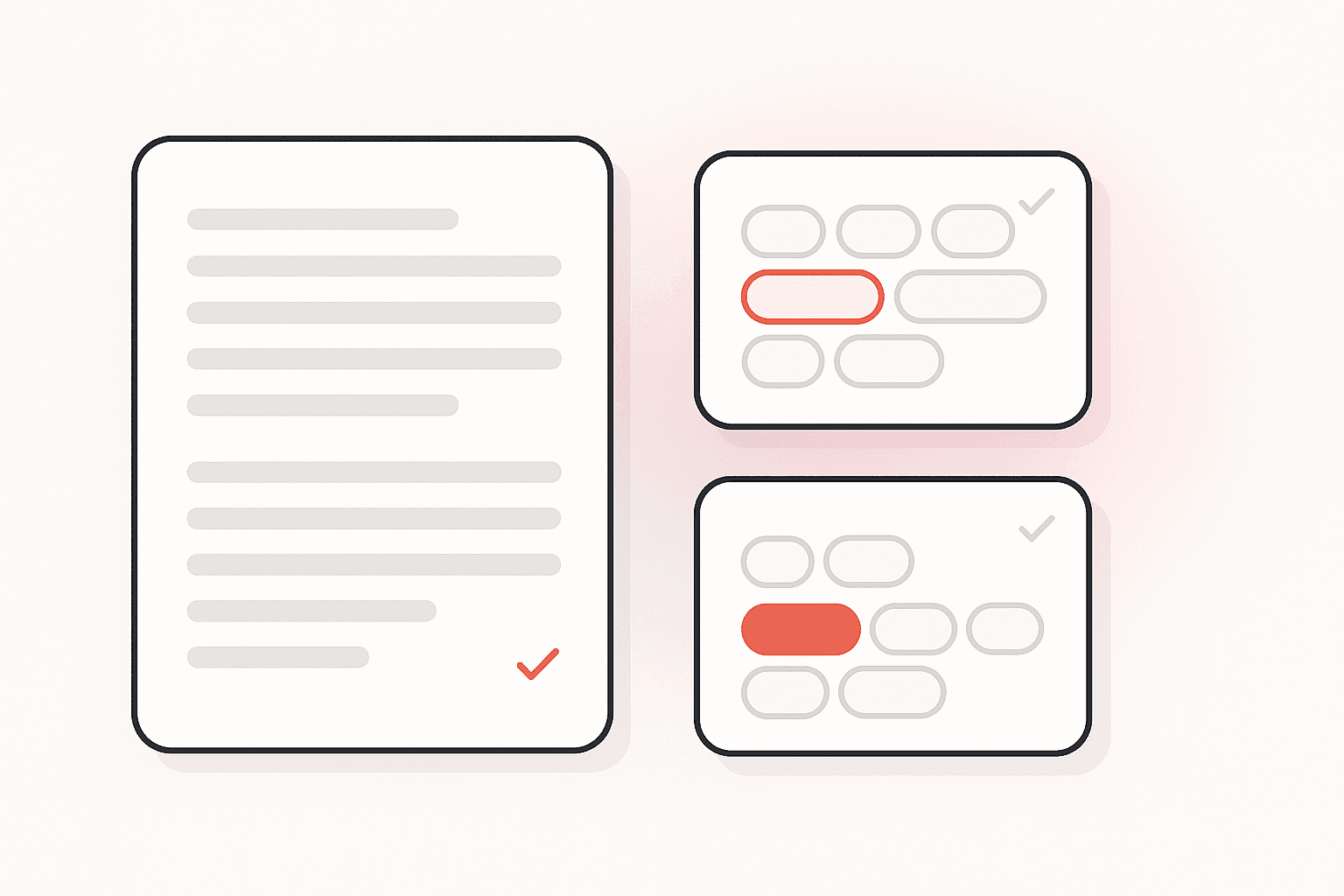
Titles get the attention, but the description and tags are where a lot of quiet ranking power lives — and where most creators leave it on the table. A strong description reinforces what your video is about, feeds YouTube extra context, and keeps viewers on the page. Tags clean up the edges. Here's how to do both well.
If you haven't yet, start with the complete YouTube SEO guide for how these pieces fit together, and the titles breakdown for the part that gets the click.
The description: the above-the-fold rule
Only the first two or three lines of your description show before the "...more" cutoff. Those lines are the most valuable real estate you have after the title. Two jobs for them:
- Restate your primary keyword in a natural, human sentence — not a keyword dump.
- Give the viewer a reason to keep watching or click through.
Example: "YouTube SEO doesn't have to be guesswork. In this guide you'll learn the exact steps to rank your videos in search — starting with the one setting most creators skip." That names the topic for the algorithm and creates a small open loop for the human.
Below the fold: 150–300 words that earn their place
The rest of your description should genuinely describe the video. This isn't filler — YouTube reads all of it for relevance, and a thorough description often surfaces you for long-tail searches you never explicitly targeted.
Include:
- Your secondary keywords, worked in naturally across real sentences.
- Timestamps (e.g.
0:00 Intro,1:20 Keyword research). These create clickable chapters, improve navigation, and lift watch time. - Internal links to your other relevant videos and playlists — this is how you turn one view into a session.
- A single clear call to action — subscribe, download, sign up. One, not five.
What NOT to do in descriptions
- Don't keyword-stuff. A paragraph of comma-separated phrases reads as spam and can suppress you.
- Don't paste the same boilerplate into every video. YouTube values unique, specific descriptions.
- Don't bury the description in links. A wall of affiliate links up top pushes your actual content out of the visible area.
Tags: smaller signal, still worth doing
Let's be honest about 2026: tags are a minor ranking factor. YouTube itself says they mostly help when your content is commonly misspelled or ambiguous. But they're free, they take 60 seconds, and they genuinely help YouTube disambiguate niche and brand terms. Do them — just don't expect miracles.
How to use tags well
- First tag = your primary keyword. The exact phrase from your title.
- Next few = close variations. Singular/plural, reordered words, common phrasings.
- Then a couple of broad tags for your topic and niche.
- Add brand or series tags if you have a channel name or recurring series people search for.
How many tags should you use?
Not 40. Aim for roughly 8–15 relevant tags. YouTube gives you 500 characters, but quantity isn't the goal — relevance is. Ten precise tags beat thirty vague ones. Every irrelevant tag slightly dilutes the signal of the good ones.
Tag mistakes to avoid
- Tagging competitors' names or unrelated trending terms — against the rules and useless.
- Copy-pasting the same tag list onto every video — each video should be tagged for its topic.
- Single-word tags only — "seo" is hopelessly broad; "youtube seo for beginners" is findable.
Put it together
For a video targeting "YouTube SEO for beginners":
- First description line: "New to YouTube SEO? This beginner's guide walks you through ranking your first video, step by step."
- Body: 200 words describing the steps, with timestamps and two links to related videos.
- Tags:
youtube seo for beginners,youtube seo,beginner youtube seo,how to rank youtube videos,youtube search,youtube tags,youtube algorithm, plus your channel name.
The honest problem with doing this by hand
None of this is hard. It's just tedious — and it's the first thing to get skipped when you're rushing to publish. That's the whole reason we built TubePush: it reads your transcript and generates a keyword-rich description with timestamps and a clean, relevant tag set tuned to your channel — then pushes it directly to YouTube. The boring 15 minutes, gone, done right every time.
Back to the full YouTube SEO guide →
Stop hand-writing YouTube SEO
TubePush generates optimized titles, descriptions, and tags from your transcript — then pushes them straight to YouTube in one click.
Try TubePushKeep reading
How to Get More Views on YouTube: 12 SEO Tactics That Actually Work
A practical, no-fluff checklist to get more views on YouTube — from keyword research and titles to retention, thumbnails, and the metadata most creators get wrong.
YouTube SEO: The Complete 2026 Guide to Ranking Your Videos
Everything you need to rank on YouTube in 2026 — how the algorithm actually works, keyword research, titles, descriptions, tags, thumbnails, and a repeatable optimization workflow.